











Hybrid or Plug-in Hybrid — What is the difference between them?
Published:
The urgency of environmental problems and technological progress are prompting more and more drivers to switch from traditional cars with internal combustion engines to hybrid models. However, many people are still unclear about what this technology is and, most importantly, how a conventional hybrid differs from its relatively new alternative, the plug-in hybrid.
How Does a Conventional Hybrid (HEV) Work?
Hybrid cars run on a combination of an internal combustion engine and an electric motor. Their main distinguishing feature is that they do not need an external charger and generate energy on their own.
The battery is charged when the car brakes. This process is called regenerative braking — when the driver presses the brake pedal, the electric motor switches to generator mode, converts rotational energy into electricity, and stores it in the battery.
While the car is moving, the engine and the electric motor do not always run at the same time. At low speeds, the car runs mainly on electricity, while at higher speeds the internal combustion engine kicks in. On stretches of road where extra power is needed, both work in sync. This process is controlled automatically, independently of the driver.
Advantages of a Hybrid Car:
- Does not require charging from an external source;
- Thanks to the regenerative braking system, the brake pads don't wear out quickly;
- Has a small battery, so the car is lightweight;
- The system is fully automatic and requires no additional intervention from the driver.
- Uses 30-40% less fuel than a regular car
What Is a Plug-in Hybrid (PHEV)?
Plug-in hybrids, or PHEVs, are a more recent result of the development of hybrid technology. Like conventional hybrids, these cars have two types of motors, but their battery has a much larger capacity and, in addition to regenerative braking, can also be charged from an external charging station.
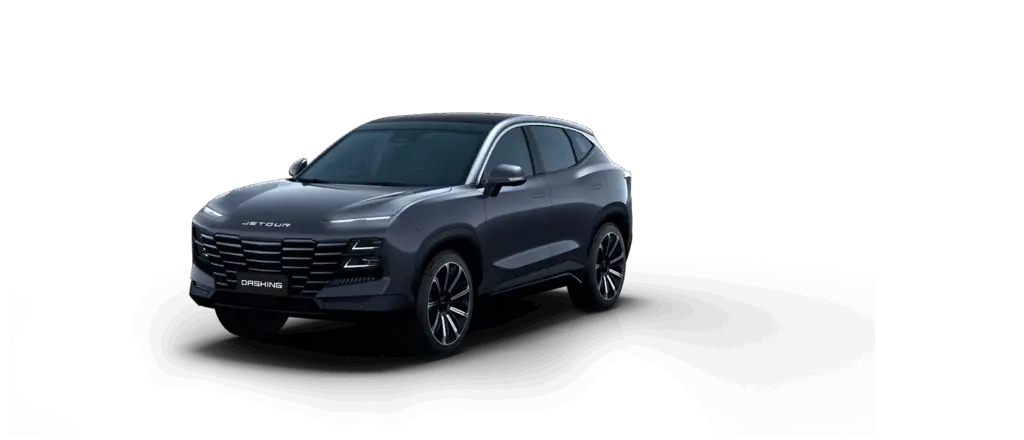
Thanks to their large battery, PHEVs cover distances of 40 to 80 km on electric power alone. Some modern models, such as the Jetour T2 I-DM, can even travel more than 100 km.
In plug-in hybrids, the electric motor does most of the work, and the internal combustion engine only switches on when the battery is depleted or when high power is needed.
Getting back once again to Jetour's hybrid model – it also has another interesting feature. This is V2L (Vehicle-to-Load) technology, which turns the electricity stored in the car's battery into a power source. It lets you charge and use various devices, such as a kettle, power tools, or camping equipment.
Advantages of a Plug-in Hybrid:
- Everyday routes can be covered on electric power alone;
- When the electric charge runs out, the internal combustion engine switches on automatically;
- Can be used to charge various devices;
- Can be charged from an external charging station;
- Produces no emissions when running in electric mode;
Discover the unique capabilities of the Jetour T2 plug-in hybrid model and book a test drive, so you can experience the technology of the future for yourself.
What Are the Main Differences Between Them?
A conventional hybrid accumulates energy only while the car is moving, during braking and while the internal combustion engine is running. A plug-in hybrid, however, can also be charged from an external source: at home, at work, or at public charging stations.
Because of this, a plug-in hybrid runs on its electric motor when driving at low speeds in the city and does not use any fuel. A conventional hybrid, on the other hand, first has to travel a certain distance and build up energy before it can activate its electric motor.
The second important factor is battery size. An HEV has a small battery that only plays a supporting role for the internal combustion engine. A PHEV's battery, on the other hand, is much larger, which allows the car to cover a certain distance on battery power alone. The electric range also differs: a conventional hybrid travels 2-3 kilometers in electric mode, while a plug-in hybrid covers 40-80 kilometers or even more.
Which Is More Eco-Friendly — Hybrid or Plug-in Hybrid?
A plug-in hybrid travels a greater distance on its electric motor, meaning it runs on electricity alone and consumes only a small amount of fuel. As a result, cars with this technology produce fewer emissions and do less harm to the environment.
However, for a plug-in hybrid to be truly eco-friendly, you need to charge it regularly. If the car isn't charged and runs only on its internal combustion engine, it loses this advantage.
Which One Suits Your Needs?

This choice depends on your lifestyle. If you mostly drive in the city, travel less than 50 kilometers a day, and don't have access to a private charging station, then you should choose a conventional hybrid. It will keep its electric motor charged on its own and use fuel economically.
A plug-in hybrid is suitable for those who have reliable access to charging infrastructure. If your daily route is up to 60 kilometers and you can charge in the evenings, fuel consumption will be reduced to a minimum.
Keep in mind that fully charging a PHEV battery from a standard power outlet takes 3 to 6 hours. If you have a parking space at home or at work where you can charge the car, this is not a problem. Otherwise, relying on public chargers will make owning a PHEV more complicated, and you won't be able to take full advantage of its capabilities.
Discover Jetour SUVs for city and off-road trips!
In conclusion, both technologies aim to save fuel and reduce emissions, but they achieve this in different ways. A conventional hybrid charges its battery automatically and doesn't need an external charger, but it can only cover a minimal distance on its electric motor alone. A plug-in hybrid requires regular charging, but in return it covers daily routes without using any fuel.
